●
"Sound is a creature of the mind."
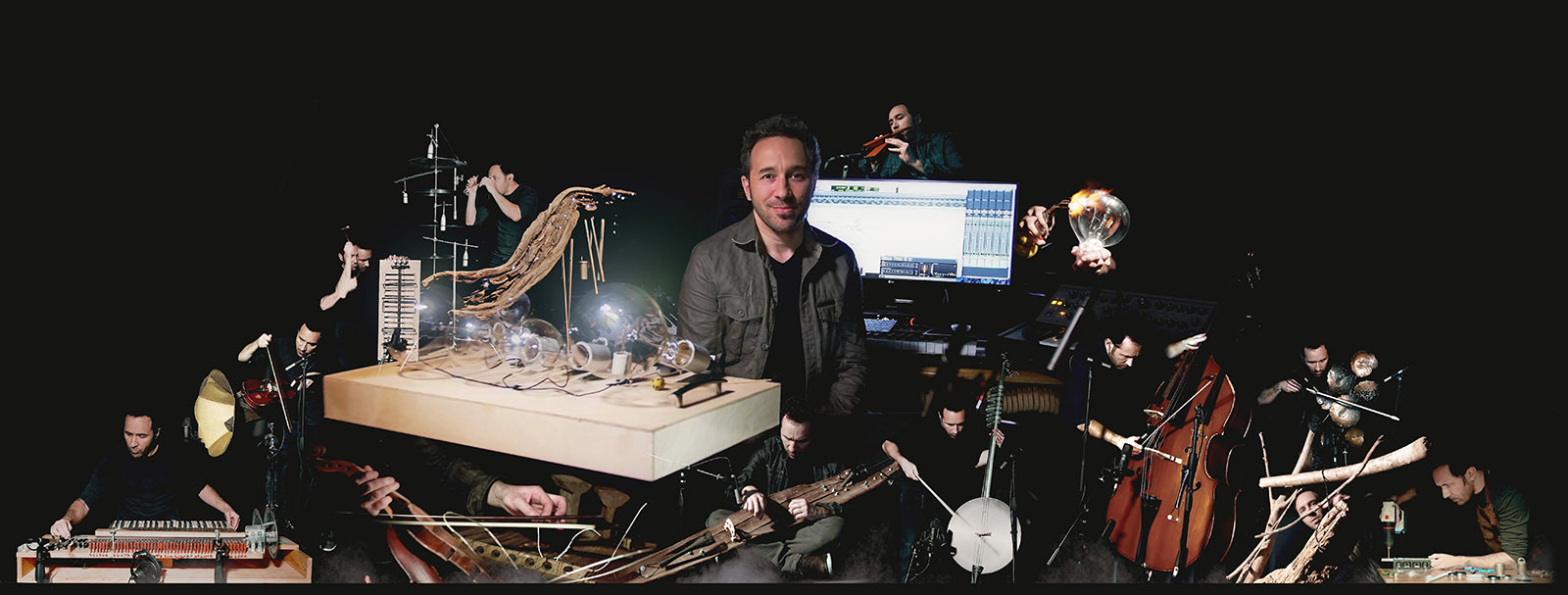
Diego Stocco is considered a pioneer of music sound design, active for over 25 years with works recognized internationally. He had lived and worked in the United States for approximately 18 years, participating in numerous projects.
Playing instruments he built himself, he has performed as a soloist on "Sherlock Holmes" (Oscar-nominated soundtrack, written by Hans Zimmer), the "Assassin's Creed" series (two titles) and "Warhammer 40,000: Darktide" written by BAFTA-winning composer Jesper Kyd, and "Starcraft II: Legacy of the Void" written by Jason Hayes.
As a composer, he wrote the music for the film "Chernobyl Diaries", the video game "The Conduit" and his song "Thunderous" appears on the soundtrack for the film "Rebel Moon - Part 1: A Child of Fire". As a music sound designer, he has contributed to the soundtracks of the films and TV shows "Immortals", "Takers", "The Tudors" and others.
Diego is a prolific builder of original musical instruments and inventor of innovative sampling techniques applied to the production of virtual instruments. Among his many credits, he is one of the Principal Sound Designers for Spectrasonics Omnisphere (including the new version 3), Stylus RMX, and his own Sonic Extension called Twisted Trees, and synth programming for Korg and Moog.
He has produced music and worked on surround projects with DTS (also in collaboration with notable musicians such as Patrick Leonard - producer and songwriter for Madonna, Elton John, Leonard Cohen, and Dave Stewart - producer and songwriter for Eurythmics) and on audio branding projects for Apple, Adidas, Bottega Veneta, Burt's Bees, GROHE, Eurosport, and Kashi.
His label, Sonic Artifact, is distributed worldwide by BMG Production Music, with placements in dozens of film trailers, TV shows, and promos on major streaming platforms and networks, including Netflix, Apple+, AMC+, Disney+, Amazon Prime, ABC, Discovery, Hulu and other international channels. He has also developed advanced sound design techniques applied to live performance and an innovative approach to convolution called Rhythmic Convolution. He has shared his approach in masterclasses and presentations at some of the leading universities and music institutions in the United States, including Berklee College of Music and Blackbird Academy, as well as at various film festivals and conferences.
Driven by the desire to explore musical sounds he hears all around him, Diego has produced a series of videos where he plays music from a tree, a bonsai tree, a dry cleaning shop, and his own "orchestra" of original instruments he built, creating a unique sonic style that continues to be appreciated by listeners of all ages.
His music videos have also been featured in various museums and exhibits, including the prestigious Smithsonian American Art Museum (SAAM) in Washington DC, the Grammy Museum in Los Angeles, and the Peabody Essex Museum (PEM) in Massachusetts. They are also cited in textbooks around the world as examples of sonic creativity and a playful approach to music.
After returning to Italy, Diego is currently working on numerous projects, and since 2026, is a professor of Performances and Live Electronics at the Venezze Conservatory in Rovigo.
●
Diego Stocco e’ considerato un pionere del music sound design, attivo da piu di 25 anni con lavori riconosciuti a livello internazionale. Ha vissuto e lavorato negli Stati Uniti per circa 18 anni, partecipando a numerosi progetti.
Suonando strumenti da lui stesso costruiti, ha partecipato in qualità’ di solista a “Sherlock Holmes” (colonna sonora candidata al premio Oscar, scritta da Hans Zimmer), alla serie “Assassin’s Creed” (2 titoli) e “Warhammer 40,000: Darktide” su musica del compositore premio BAFTA Jesper Kyd, e “Starcraft II: Legacy of the Void” composta da Jason Hayes.
Come compositore, ha scritto la musica del film “Chernobyl Diaries”, del videogioco “The Conduit” e con il suo brano “Thunderous” e’ presente nella colonna sonora del film “Rebel Moon - Part 1: A Child of Fire”. Come music sound designer ha contribuito alle colonne sonore dei film e TV shows “Immortals”, “Takers”, “The Tudors” e altri.
Diego e’ un prolifico costruttore di strumenti musicali originali ed inventore di tecniche innovative di sampling applicate alla produzione di strumenti virtuali. Tra i vari credits, in primo luogo la sua collaborazione come uno dei Principal Sound Designers di Spectrasonics Omnisphere (inclusa la nuova versione 3), Stylus RMX, della sua Sonic Extension chiamata Twisted Trees, e synth programming per Korg e Moog. Ha prodotto musica e lavorato a progetti in surround con la DTS (anche in collaborazione con musicisti di rilievo come Patrick Leonard - produttore e songwriter per Madonna, Elton John, Leonard Cohen, e Dave Stewart - produttore e songwriter per gli Eurythmics) e progetti di audio branding per Apple, Adidas, Bottega Veneta, Burt’s Bees, GROHE, Eurosport, Kashi.
La sua etichetta, Sonic Artifact, e’ distribuita nel mondo dalla BMG Production Music, con placements in dozzine di film trailers, TV show e promo delle maggiori piattaforme di streaming e networks, tra i quali Netflix, Apple+, AMC+, Disney+, Amazon Prime, ABC, Discovery, Hulu e altri canali internazionali. Ha inoltre sviluppato tecniche avanzate di sound design applicate al live performing e un innovativo approccio alla convoluzione chiamato Rhythmic Convolution. A livello educativo ha condiviso il suo approcio in Masterclass e presentazioni in alcune delle maggiori universita’ e istituti musicali Statunitensi, tra le quali Berklee College of Music e Blackbird Academy, oltre a vari film festivals e conferenze.
Diego, spinto dal desiderio di esplorare suoni musicali che sente tutto intorno a lui, ha prodotto una serie di video dove ha suonato musica da un albero, un bonsai, un negozio di lavasecco, e una sua “orchestra” di strumenti originali da lui costruiti, creando uno stile sonoro tutto suo che continua ad essere apprezzato da ascoltatori di tutte le eta’.
I suoi video musicali sono stati presentati anche in diversi musei ed exhibits, tra i quali il prestigioso Smithsonian American Art Museum (SAAM) a Washington DC, il Grammy Museum a Los Angeles ed il Peabody Essex Museum (PEM) in Massachusetts, e sono anche citati in libri scolastici in vari paesi del mondo come esempi di creatività’ sonora e di approcio giocoso al mondo della musica.
Dopo il suo ritorno in Italia, Diego sta ora lavorando a numerosi progetti, e dal 2026 e’ docente di Ambienti esecutivi e di controllo per il live electronics presso il Conservatorio Venezze di Rovigo.